
News & Blogs




Chef Andy Matsuda, founder of the Sushi Chef Institute in California, shares how Japanese cuisine is evolving beyond technique and flavor to tell deeper cultural stories. In this exclusive interview, he discusses the role of “tasting the story,” the global rise of omakase, and how TREHA® supports authentic culinary expression worldwide.
Discover his insights on authenticity, education, and the evolving global sushi scene in this special feature.
Andy Matsuda, author of “If You Want to Compete Globally, Learn Sushi in Los Angeles!”, visited Nagase Viita Co., Ltd. during the promotional tour for his new book. He shared the deeper message and intentions he poured into his book, his profound insight into Japanese cuisine, and his experiences using our TREHA®, a signature ingredient we proudly offer. The meeting included Nagase Viita’s president back then and members of the Global Market Development Department, along with Team TREHA® members, making for an exciting and insightful exchange.
Team TREHA®: Congratulations on your new publication! What inspired you to write this book?
Chef Andy: Thank you. The idea actually came to me around 2020 during the pandemic. Operating the Sushi Chef Institute became challenging at that time, so I took the opportunity to focus on writing.
Team TREHA®: The pandemic was certainly a defining moment. How is your school doing today?
Chef Andy: Surprisingly, even during the pandemic, we received many inquiries. I think a lot of people were eager to gain hands-on skills they could use professionally. Today, the school is fully operational with classes, events, and consulting services running smoothly.
Japan’s Water-Rich Environment Shaped Its Cuisine—A Culture of Delicacy and Refinement
Team TREHA®: Could you tell us about the latest trends in Japanese cuisine across the U.S.? Your book mentions the large number of people who enroll at SCI each year, which suggests growing interest.
Chef Andy: Yes, Japanese cuisine is reaching a broader audience. It’s often associated with healthy eating and is especially popular among the affluent. Japanese cuisine is a "water-based culture." Think about how dashi draws umami from water. Compared to many other cuisines, including Chinese or French, which often use oil as a medium to extract flavor, Japanese cooking is naturally delicate and perceived as more health-conscious, an outcome shaped by its roots in Japan’s water-centered culinary culture.

Team TREHA®: That explains why TREHA®, known for its moisture-retaining qualities, pairs so well with traditional Japanese cooking. Your comment about Japanese cuisine being rooted in a water culture truly resonated with us and felt immediately convincing.
Enhancing the Quality of Rice with Moisture Retention
Team TREHA®: How do you usually use TREHA® in your cooking?
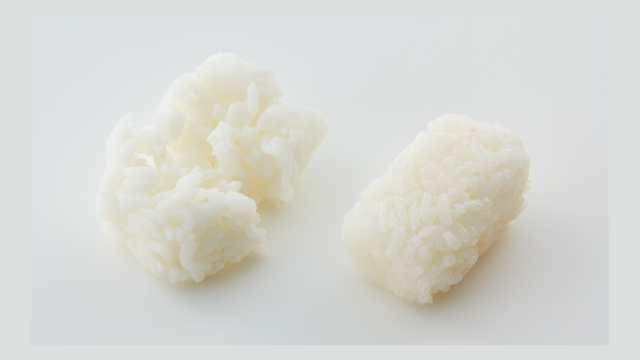
Chef Andy: I add it when cooking rice. Adding TREHA® to rinsed rice before steaming helps the rice retain moisture from the inside. The air in the U.S. is generally drier than in Japan, and the rice here tends to be less moist. TREHA® helps counteract that. In class, we promote it as "SUSHI TREHA®," highlighting its value in perfecting sushi rice.
Team TREHA®: Thank you! In some U.S. states, there are regulations requiring food to be served within a few hours of preparation. Does TREHA® help in those situations, too?
Chef Andy: Definitely. Even in situations where food is served shortly after preparation, TREHA® is effective because sushi stands in the U.S. often operate in harsher conditions than in Japan. The air is much drier, and it's common to leave rice cookers uncovered during service. TREHA® performs especially well in these environments, and its moisture-retaining properties can make a difference even over a short time.
▶▶[Video] Why and how to prepare sushi rice with TREHA®, demonstrated by Chef Andy Matsuda. Watch on YouTube.
Passing On the Real Thing
Team TREHA®: According to your book, you were urged to found the school to pass on authentic techniques that can be learned in a short period of time. Many of your graduates have become successful. How do you view the current state of the industry?
Chef Andy: There have been a few sushi booms. The first started in the early 2000s after EXPO 2005 in Aichi, Japan. Then came a second boom driven by international entrepreneurs, which brought in a wide variety of sushi styles. Some were accessible and widely accepted, while others strayed far from sushi’s traditional identity, for better or worse. Now, we’re in a third wave where the focus is on authenticity. High-quality sushi is expected as the standard.
Team TREHA®: So the American food scene is increasingly valuing authenticity?
Chef Andy: Exactly. It's not just about ingredients anymore. The overall dining experience is beginning to carry more weight. The Japanese concept of "omakase" has taken root in the U.S. as a chef-curated tasting course. People also want to know the story behind the ingredients. For example, rather than just saying "rice and seafood," they’re excited by details like "rice harvested in Japan" and "white shrimp freshly caught from Toyama Bay, renowned for its clean waters and high-quality seafood. " Diners today savor the story as much as the meal.
Team TREHA®: An increasing number of people who travel to Japan are getting the chance to experience authentic Japanese cuisine, making it unforgettable part of their journey.
Chef Andy: Absolutely. Once exposed to an authentic experience, people’s expectations and appreciation for Japanese cuisine are sure to shift.
Team TREHA®: And your students are becoming capable of meeting those expectations through the authentic skills and mindset you pass on to them.
Chef Andy: Yes. One of our graduates introduced “omakase” for the first time in Mexico. According to him, the very act of eating sushi is itself an educational and immersive cultural experience.
Team TREHA®: Your work seems to embody the very spirit of conveying not just food, but Japanese food culture itself – from you to your students, and from your students to the world.
Concluding Remarks
Many SCI graduates continue to call Chef Andy "Sensei" and remain connected and continue to show deep respect for him beyond their time at the institute. His book features numerous success stories of alumni who have gone on to become ambassadors of authentic sushi culture, spreading their wings around the globe. Culinary environments and ingredient availability vary from country to country, but if TREHA® can contribute even in a small way to the success of these chefs on the world stage, it brings us immense pride and joy.
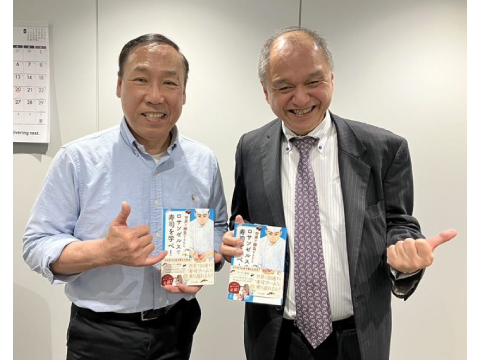
Chef Andy mentioned that we live in a time when stories carry more weight. After this interview, we couldn’t help but feel that both he and SCI are part of that unfolding narrative.
With sincere thanks to Chef Andy for his generous insights and collaboration, we bring this interview to a close and look ahead to another year of supporting the Sushi Chef Institute.
(Interview Date: March 12, 2025)
[Our Guest Today]
Andy MATSUDA
CEO and Chief Instructor of the Sushi Chef Institute (SCI) in Torrance, California.
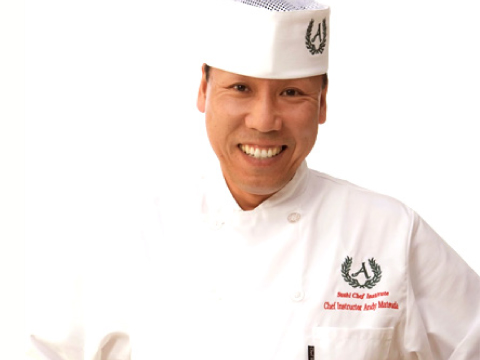
Master Chef Andy Matsuda, a globally respected sushi master and educator, created the first sushi chef Institute in America. At SCI, students from around the world are trained in traditional sushi-making techniques combined with modern approaches to meet global culinary standards. Chef Andy’s mission is to cultivate sushi chefs who not only master technique but also understand the spirit behind it.
His contributions have earned him international recognition. In 2007, Newsweek Japan named him one of “The 100 Japanese People the World Respects.” In 2019, Japan’s Ministry of Agriculture, Forestry and Fisheries appointed him as a “Japanese Cuisine Goodwill Ambassador”.
In 2025, he was honored with the 19th Minister's Awards for Overseas Promotion of Japanese Food. This prestigious award is presented to those who have made outstanding contributions to introducing and promoting Japanese cuisine, food culture, and Japanese agricultural and fishery products overseas.
Chef Andy’s publications include:
Let’s Make Sushi!: Step-by-Step Tutorials and Essential Recipes for Rolls, Nigiri, Sashimi and More from a Master Sushi Chef (English, 2023)
世界で勝負するならロサンゼルスで寿司を学べ!: 2ヶ月で人生を変える方法 (If You Want to Compete Globally, Learn Sushi in Los Angeles!: How to Change Your Life in Two Months) (Japanese, 2025)
Read more about Chef Andy's vision, experience, and deep love for sushi in the stories linked below and follow the path his work continues to shape.
Exclusive interview with Chef Andy Matsuda of Sushi Chef Institute in Torrance, California:
#1 of 3, Chef Andy talks about TREHA® and his sushi school
#2 of 3, Chef Andy's initiatives on sustainability
#3 of 3, Chef Andy's future goals and action items
Did you find this blog interesting?
Please share it with your friends in the food service industry.
We regularly update the blog about the food culture of Japan, where TREHA® was discovered for culinary applications.
Click here and send us a message to subscribe.
Or hit us up on Instagram @trehalose_sensei!
You might also be interested in: