
News & Blogs




Japan is home to many traditional sweets that are enjoyed not only on special occasions, but also as an everyday indulgence. MITARASHI DANGO, skewered rice dumplings grilled to perfection and covered in a sweet-savory soy glaze, is one such beloved treat. Interestingly, the flavor profile, reminiscent of teriyaki, is easily appreciated around the world as well. In this article, we dive deep into the cultural and culinary world of Mitarashi dango and introduce how TREHA® can enhance the quality of this classic wagashi (traditional Japanese confection). We hope this also offers professional chefs a spark of inspiration as they explore the creative possibilities of this casual Japanese treat enhanced by TREHA®.
In this blog, we touch on diverse topics about Japanese food cultures, practices together with the culinary secret, TREHA®, and its important role in the Japanese food industry. We hope our blog helps you obtain in-depth knowledge of the secrets and science behind Japanese cuisine, shared from our kitchen, to yours.
What is Mitarashi Dango? The Irresistible Charm of Sweet Soy Glaze
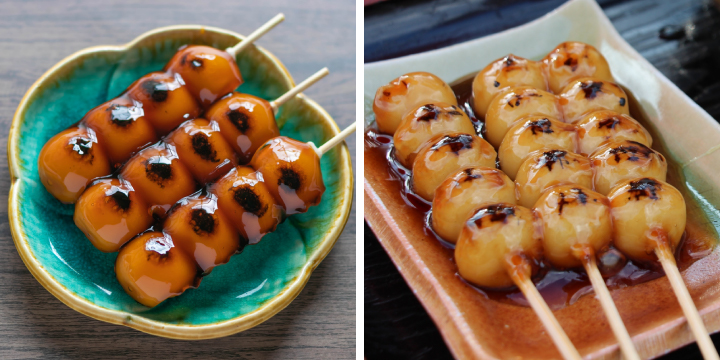
Mitarashi dango is one of the first treats that comes to mind for many Japanese people when they crave something sweet. Skewered mochi-like dumplings are grilled and then coated with a thick, sweet-savory soy glaze. This snack is beloved across Japan.
There are several theories about its origin, but Mitarashi dango is closely tied to shrine rituals. The word “Mitarashi” literally means “handwashing,” referring to the purification water found at the entrance of a shrine, where worshippers cleanse their hands and mouths before approaching the sacred grounds. The dumpling is said to have been named after this ritual water. Traditionally, the dumplings are shaped into five balls, with one slightly apart from the others. This arrangement is said to symbolize bubbles rising from the sacred Mitarashi Pond at Kyoto’s Shimogamo Shrine. While the five-ball style remains common in western Japan, four-ball skewers are more often seen in the eastern regions.
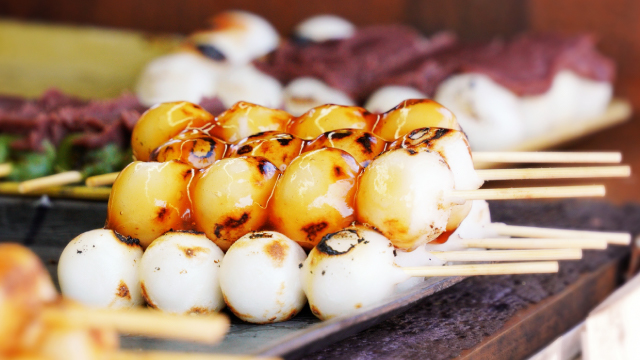
What makes Mitarashi dango especially interesting is how its flavor resonates beyond Japan. The sweet-savory soy glaze is reminiscent of teriyaki, a taste that has already found worldwide popularity. The science behind this teriyaki-like depth of flavor is also worth noting.
●●●- The Flavor Science Behind Teriyaki and Mitarashi Dango ●●●-
Teriyaki's appeal lies in the simultaneous occurrence of two chemical reactions: the Maillard reaction and caramelization. The Maillard reaction happens when the amino acids in soy sauce and proteins from meat combine with sugars under heat, creating rich, savory flavors and browning. Caramelization occurs when sugar content breaks down and oxidizes at high temperatures, producing sweetness and aromatic notes. These non-enzymatic browning reactions overlap during cooking, resulting in the complex depth of teriyaki flavor.
Where Can You Find Mitarashi Dango?
If you’ve ever traveled to Japan in search of food you've seen in anime or manga, chances are Mitarashi dango made that list. Alongside onigiri and ramen, it's one of the most recognizable icons of Japanese cuisine. You can find it all over Japan—why not try comparing a few kinds?
Convenience stores & supermarkets: Packaged and sold in sets of three, these treats cost around 100 yen (less than 1 USD). Japan’s innovation in making traditional sweets so accessible is truly impressive.
Wagashi specialty shops: High-quality dango made with premium ingredients can be found here, often located in department store basements.
Festivals & tourist spots: Many street vendors offer freshly grilled skewers over charcoal, giving a warm, aromatic experience.
Mapping Japanese Flavor in America—One Dango at a Time
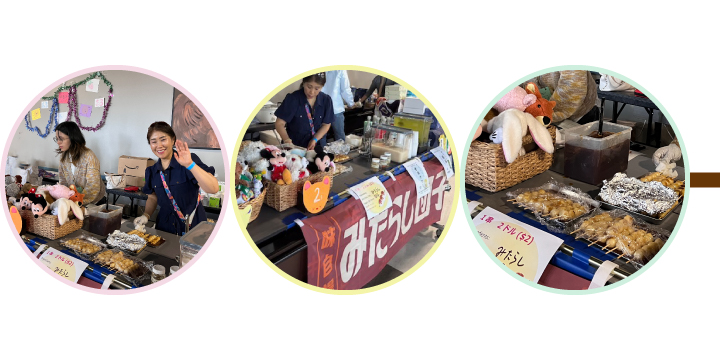
For the past few years, I’ve had the joy of running a Mitarashi dango booth at the community fair of a Japanese language supplementary school in Colorado. These schools are weekend institutions designed to help children living abroad maintain fluency in Japanese and stay connected with their cultural heritage. Some families plan to return to Japan in the future, while others simply wish to preserve their roots. At the fair, students are encouraged to place all order in Japanese. Watching children, who normally speak English at home and school, shyly place their order in Japanese, "Mitarashi dango, one please" and then return with growing confidence to say, "It was so good, can I have another?" is a moment that fills me with joy and a sense of meaningful connection. Their hesitant but sincere Japanese and their reaction to the flavor reminds me how deeply taste and emotion are intertwined. That sweet-savory sauce and the chewy texture of dango don’t just recall the festival experience and grandparents’ homes in Japan. They create new, meaningful memories for the next generation.
Interestingly, although I also work as a consultant supporting the school’s operations, it seems that, to many children and parents, I’m simply "the dango lady." Whether it’s subconscious imprinting or some kind of culinary hypnosis, I sometimes wonder if my real role here is truly making dango instead of assisting in the school’s administration. And honestly, I wouldn’t mind. If these children remember Japanese words, flavors, and human connection through my dango, then I’ll gladly keep being under the spell and look forward to hearing, "Can I have one more, please?" again next year.
Is Mitarashi Dango the Teriyaki of Sweets?
If you're the kind of chef who enjoys pairing sweet-savory glazes with grilled elements, Mitarashi dango opens up delicious creative possibilities. For example:
Serve skewered dango with grilled seasonal fruit
Pair warm dango with cold ice cream for contrast
Use caramelized soy glaze as a dessert or even meat glaze base
Even more impressive? Mitarashi dango is gluten-free, plant-based, and low-fat. Made with rice flour and water, it contains no wheat, dairy, or added fats, making it suitable for allergen-aware menus, as long as ingredients are carefully checked for potential allergens when preparing for customers with dietary sensitivities. Yet, it still delivers rich umami and satisfying depth. The secret? Soy sauce is rich in amino acids like glutamate, which create savory flavors that stand strong even without fats. "Is it a dessert or a sauce?" The answer lies in your next creation.
TREHA® Makes Traditional Sweets Last Longer and Look Better
Mitarashi dango may look simple, but it represents a fusion of Japanese culinary wisdom and modern food science. Using TREHA® (trehalose from Nagase Viita Co., Ltd.) in traditional Japanese treat like Mitarashi dango offers several key benefits:
Slows down starch retrogradation: Keeps dango soft and chewy longer
Adds freezing stability: Maintains texture even after freezing and thawing
Creates mild sweetness: Adds a clean, gentle flavor profile that sugar alone can't provide
Enhances gloss: Improves shine and texture of the soy glaze
Japan offers many casual sweets like Mitarashi dango that aren’t just for special occasions. In upcoming articles, we’ll explore other treats shaped by region, season, and rice culture—stay tuned!
Did you find this blog interesting?
Please share it with your friends in the food service industry.
We regularly update the blog about the food culture of Japan, where TREHA® was discovered for culinary applications.
Click here and send us a message to subscribe.
Or hit us up on Instagram @trehalose_sensei!
You might also be interested in: