
News & Blogs




With nutrient-rich rice and soy protein, Oinari-san offers a balanced meal with expanded plant-based protein options.
In this blog, we touch on diverse topics about Japanese food cultures, practices together with the culinary secret, TREHA®, and its important role in the Japanese food industry. We hope our blog helps you obtain in-depth knowledge of the secrets and science behind Japanese cuisine, shared from our kitchen, to yours.
Oinari-san
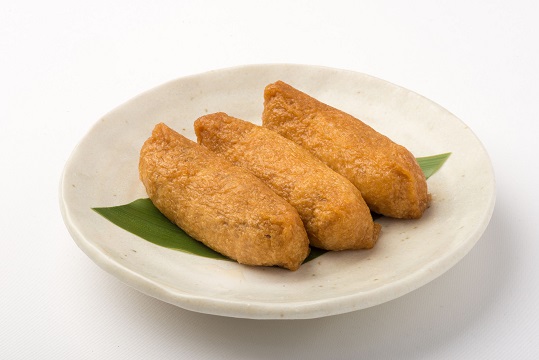
For those who know the taste, Oinari-san (おいなりさん) probably makes them picture the juicy burst of dashi broth flavor that spreads in the mouth. For readers who have not yet tasted it, let me explain briefly. "Oinari-san" is a dish made by stuffing vinegared rice into abura-age (fried tofu pouch) that has been simmered in dashi, then shaped into either a rectangular or triangular form. Sometimes, ingredients like edamame are mixed into the vinegared rice. Oinari-san is a portable food, similar to the well-known "onigiri," and has long been a familiar snack or lunch item in Japan.
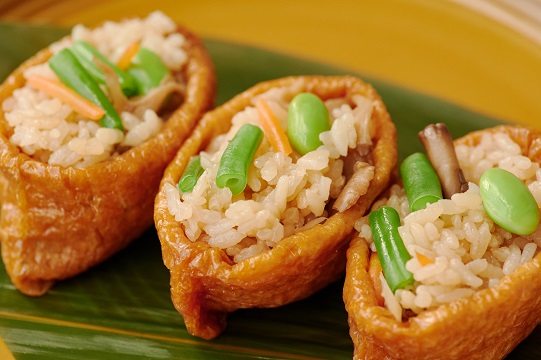
*Source: Ministry of Agriculture, Forestry and Fisheries website "Our Regional Cuisines" (https://www.maff.go.jp/e/policies/market/k_ryouri/search_menu/2854/index.html)
The term Oinari-san is used as a respectful and endearing way to refer to "Inari," which represents the shrines dedicated to foxes, seen as messengers of the gods. The connection between foxes and abura-age, believed to be a fox’s favorite food, is the origin of the name.
Incidentally, because of this fox-abura-age association, noodles topped with abura-age are called "kitsune udon" or "kitsune soba." The golden-brown color of abura-age is reminiscent of a fox's fur, and this color is also referred to in Japanese cooking terms, such as “bake the dough until it becomes fox-colored."
The Growing Popularity of Oinari-san Abroad
Nowadays, Oinari-san has been gaining popularity in France, particularly in Paris. In some cases, Oinari-san is served as party catering, with the ingredients beautifully presented atop the abura-age. "Oinari-san, as a perfect finger food, is also enjoyed as an aperitif, paired with drinks. This fresh approach offers a novel experience.
Onigiri sold in Parisian supermarkets often use vinegared rice, and with sushi already widely popular, customers seem to have become quite accustomed to vinegared rice. Oinari-san is now also being spotted in stores that sell onigiri and sushi, likely being enjoyed as a lunch option.
Trivia: Names for Inari Sushi Around the World
While many countries simply refer to this dish as "Inari sushi" or "Inari," in places where it has become a unique part of the local cuisine, there seem to be other names as well.
In Japan: Inarizushi (稲荷寿司), Oinari, Oinari-san
In France: Sushis inari, Inarizushi, Oinari
In the United States: Inari sushi, Inari
In Taiwan: Doupi sushi (豆皮壽司), Daohe sushi (稻荷壽司)
In South Korea: Inari chobap (이나리 초밥)
A Surprisingly Nutrient-Rich Food
Oinari-san is not only a convenient and versatile food, but it's also surprisingly nutrient-dense. The abura-age (fried tofu pouch) is rich in plant-based protein derived from soybeans, as well as isoflavones, a type of polyphenol that is particularly beneficial for women.
While tofu, another soybean product, is already well-known and increasingly consumed outside of Asia, combining the carbohydrates from the rice with the nutrients in the abura-age creates a perfectly balanced and complete meal. It’s clear that Oinari-san is much more than just a delicious snack- it’s also a highly nutritious food. As abura-age gains recognition, much like tofu, it will surely add to the variety of plant-based protein options available.
More Appealing from an Outside Perspective
Oinari-san isn’t just a side dish in a bento; it can also take center stage as a finger food. As this good old traditional food item becomes appreiatged outside of Japan, the Japanese might get inspired to rediscover its charm in new ways in the near future.
For those interested, Team TREHA® has a special recipe just for you. Be sure to give it a try!
[Recipe] How to Make Inari sushi with TREHA®
Did you find this blog interesting?
Please share it with your friends in the food service industry.
We regularly update the blog about the food culture of Japan, where TREHA® was discovered for culinary applications.
Click here and send us a message to subscribe.
Or hit us up on Instagram @trehalose_sensei!
You might also be interested in:
Symbols of Inari Shrine: Fox and the crimson Torii gate (Shinto shrine archway)
Exclusive interview with Chef Andy Matsuda of Sushi Chef Institute in Torrance, California: #1 of 3, #2 of 3, #3 of 3
Slurp Your Way to Happiness: The Joyful World of Udon (Read the article)
Mochi Expansion Beyond Ice Cream. (Read the article)
Learn more about how to use TREHA® in different services categories: Grab-and-Go, Delivery, Bakery and more.