
News & Blogs




Did you know tofu was once considered a luxury item before becoming a staple in Japan? This article highlights its evolution through innovative, plant-based culinary applications, showcasing tofu as a key player in sustainable dining practices.
In this blog, we touch on diverse topics about Japanese food cultures, practices together with the culinary secret, TREHA®, and its important role in the Japanese food industry. We hope our blog helps you obtain in-depth knowledge of the secrets and science behind Japanese cuisine, shared from our kitchen, to yours.
Introduction:
Tofu # 豆腐 is made by coagulating the soy milk extracted from soybeans, typically with a coagulant called nigari (primarily magnesium chloride). Originated in China, it was introduced to Japan around the 10th century. Until the early Edo period, tofu was considered a luxury item enforced by the government, and its production was prohibited among the common people. Today, tofu is an indispensable part of Japanese cuisine, used in a variety of dishes from miso soup to hot pots. In this discussion, we will explore the various ways tofu is utilized in Japan, especially in light of the recent surge in demand for plant-based foods.
Evolution Initiated by Water Quality
Tofu, originally brought from China, has undergone significant evolution in Japan, primarily influenced by the type of water used in production. On large continents, water tends to be more mineral-rich, or harder, compared to island regions. In greater China, where the water is hard, soy milk is extracted from soybeans without heating to prevent premature coagulation caused by minerals. This soy milk is then heated and coagulated with a coagulant, then pressed to expel excess water, resulting in a firmer and denser product. Consequently, Chinese tofu is typically firmer and thicker.
In contrast, Japan's predominantly soft water supports a different method. Here, soaked soybeans are cooked and pureed to extract soymilk, as the lower mineral content does not cause premature coagulation of the proteins. Nigari, primarily consisting of magnesium chloride, is added towards the end of the production process. This flexibility in the heating process enhances the protein concentration in the soymilk, leading to a distinct evolution of Japanese tofu. Some regions of Japan still employ the original Chinese production method, especially in areas where tofu firmness was crucial for efficient transportation before the advent of refrigeration.
Two Main Tofu Varieties in Japan
Today, two main tofu varieties commonly consumed in Japan: Silken tofu (絹ごし豆腐, Kinugoshi-tofu) and firm tofu (木綿豆腐, Momen-tofu). These names draw an analogy to the textures of silk and cotton, respectively. Silken tofu has a soft and smooth texture because it is allowed to solidify undisturbed after mixing the soy milk with coagulant. Firm tofu, initially set like silken tofu, is then broken up and pressed to remove water and reshaped, resulting in a dense, firmer texture. As a result, the water content varies slightly between the two, with silken tofu containing about 89% water and firm tofu about 86%. The smooth texture of silken tofu makes it ideal for dishes like chilled tofu (hiyayakko), while the more robust firm tofu is favored in miso soup and hot pots due to its resilience against falling apart. The following are Japanese tofu variations developed from traditional tofu types:
Grilled Tofu(焼き豆腐 Yaki-tofu): This consists of pressed firm tofu with broiled surfaces. It retains its shape while absorbing flavors, making it ideal for dishes like sukiyaki and stews.
Fried Tofu Cube(厚揚げ Atsuage): Pressed and deep-fried firm tofu that is commonly used in stews and oden.
Thin Fried Tofu(油揚げ Aburaage): Thinly sliced, pressed, and deep-fried tofu that forms a pouch. It is widely used in miso soup, side dishes, stews, and inari zushi (sushi rice stuffed in this type of tofu).
Ganmodoki (がんもどき): Deep-fried tofu balls made from crumbled firm tofu mixed with ingredients like vegetables and seaweed, bonded together with grated yam. This reconstituted tofu is treated as a side dish or a staple item in stews like oden.
Additionally, there is a shelf-stable version of tofu known as Kohri-tofu (frozen tofu), which is produced by freezing and dehydrating firm tofu. This high-nutritional-value preserved tofu, with its unique texture, is used in stewed items after rehydration in water.
Tofu to Address Protein Crisis
With the global population increase, it is predicted that by around 2030, the balance between food demand and supply will begin to destabilize. The concept of "protein crisis" is gradually emerging.
Tofu, with its long culinary history in Asia, is gaining attention as a plant-based food capable of alleviating food shortages and environmental issues. While plant-based meats made from soybeans are becoming widespread globally, they do not significantly impact Japan, where tofu is already deeply embedded in the diet. However, plant-based products that mimic the texture and taste of meat differ significantly from traditional tofu products. With the rise of plant-based foods, new types of tofu have been introduced beyond the traditional silken and firm varieties. One innovation is a rich and creamy tofu that lacks the traditional structural integrity of tofu, making it suitable as a dip or for use in dressings and soups. Another innovation is a snack bar-style tofu that offers a chewy, meat-like texture and is rich in protein, making it popular among younger generations. This evolution shows that even Japan's traditional tofu products are adapting to global trends.
Delightful Ways to Cook with Traditional Tofu
As we reevaluate the benefits of tofu and witness its evolution, including that of fried tofu, culinary innovations using tofu have kept pace. Here are some exciting dishes to introduce:
What about starting with the visually appealing and popular Italian salad "Caprese"? Typically made with tomatoes and mozzarella cheese, this salad can be transformed by substituting the cheese with silken, creamy tofu. This creates a "Tofu Caprese" that maintains the colorful appeal while providing a vegan and low-calorie version of this iconic Italian dish.
[Video] Take your creation up a notch with TREHA®: Plant-based Japanese Caprese Salad
For another delightful option, explore chewy dumplings like mochi, which are gaining popularity worldwide. Traditionally made with glutinous rice flour, water, and sugar, these dumplings can be easily prepared by mixing the ingredients, shaping the dough into small balls, and boiling them. By substituting the water with tofu, you can create dumplings that offer twice the protein content compared to traditional ones. Additionally, replacing the sugar with TREHA® enhances the smoothness of the texture and prolongs freshness. Enjoy these mochi delights with a flavorful glaze or toppings such as sweet and salty soy sauce glaze, sweet red bean paste, sesame, or crushed nuts, according to your preference.
●● Mitarashi Dango Dumplings with Tofu ●●
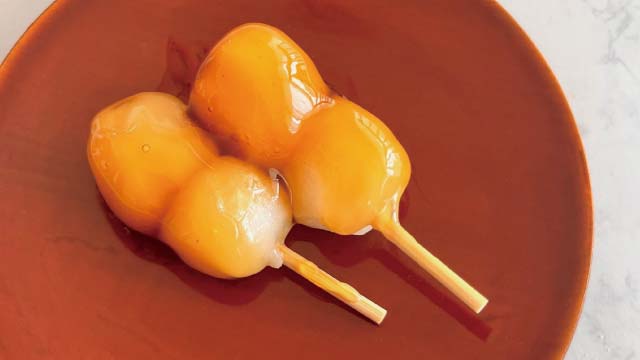
Ingredients for 4 servings:
100 g of glutinous rice flour, 20 g of TREHA® and 120 g of silken tofu.
Instructions:
Mix rice flour and TREHA®. Add silken tofu gradually to the mixed powder until incorporated.*¹
Roll the dough into small balls (15-20g each).*²In a pot, bring the water to boil and add the dough balls for 3-4 minutes after they float. Remove from the boiling water and place them in a bowl with cold water to cool.
*1 The ideal softness for the dough should resemble that of an earlobe. Adjust by adding more water or rice flour as needed.
*2 Uncooked dumpling dough can be frozen after being rolled. See HERE for more details.
Other Noteworthy Tofu Dishes
The variety of this versatile soy-based food is truly extensive. In the world of plant-based foods, tofu plays a prominent role without a doubt. Dishes like “hiyayakko” (chilled tofu) and “yudofu” (tofu hot pot) allow you to enjoy the natural flavor of tofu. There are also numerous dishes where tofu is used as a main ingredient. Let us suggest other noteworthy tofu dishes including:
Tofu Steak: Slice the tofu and pan-fry it, finishing with a teriyaki sauce glaze.
Tofu Burger: Replace about half of the minced meat with tofu to create a burger. Be sure to thoroughly remove excess water from the tofu before mixing it with other proteins such as beef, pork, chicken, or fish.
Tofu Nuggets: Mix ground chicken and crumbled tofu together, shape into nuggets, and deep-fry.
Agedashi Tofu: Dip sliced tofu into batter and deep-fry, then top with seasoned soy sauce.
Hiyayakko: Serve sliced raw tofu with ginger soy sauce.
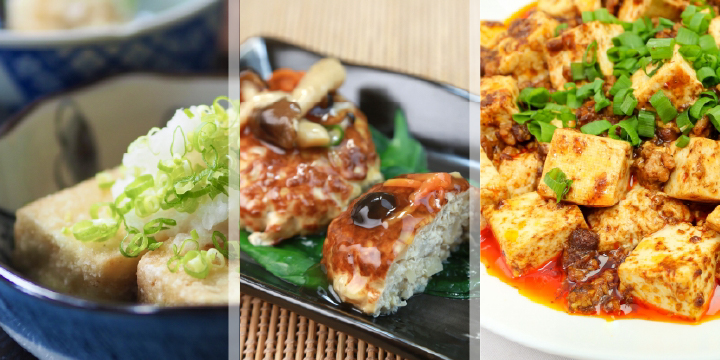
TREHA® is known to have a masking effect, proven in soy products in Japan, which reduces the beany notes specific to soy products, making these tofu dishes even more enjoyable. We’re excited to keep exploring what TREHA® can do for plant-based products.
→→ For further information, please refer to the link below ←←
[Link] TREHA® for Plant-based Food | Nagase Food Ingredients Global
Did you find this blog interesting?
Please share it with your friends in the food service industry.
We regularly update the blog about the food culture of Japan, where TREHA® was discovered for culinary applications.
Click here and send us a message to subscribe.
Or hit us up on Instagram @trehalose_sensei!
You might also be interested in: